
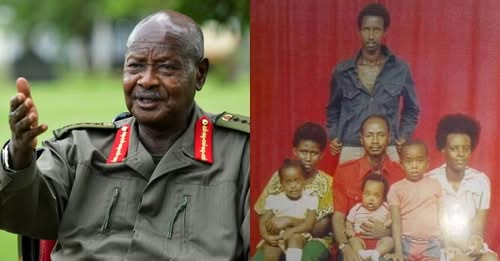
Long before he emerged as Uganda’s longest-serving president, Yoweri Kaguta Museveni lived under the shadow of fear, uncertainty, and exile — much of it unfolding quietly in Nairobi.
In the early 1980s, as Uganda reeled from political turmoil following disputed elections that returned Milton Obote to power, Museveni’s family was forced to flee the country. His wife, Janet Museveni, and their young children sought refuge in Kenya after intelligence reports indicated that Obote’s security forces were actively targeting them.
In her memoir My Life’s Journey, Janet recounts a harrowing moment that confirmed their danger: soldiers stopped their vehicle at a roadblock with clear intent to kill them. From that point on, Museveni knew his family could no longer remain in Uganda.
Initially reluctant to leave, Janet had already endured life as a refugee in Tanzania during the war against Idi Amin’s regime. However, the threats escalated to a point where Museveni urged her to prioritise their children’s safety, even above her own. The couple devised a discreet escape plan to avoid drawing attention from intelligence agents tracking Museveni’s movements across East Africa.
Their two eldest children, Muhoozi Kainerugaba and Natasha Karugire, were quietly sent to Nairobi with a trusted associate. Janet followed later by air. Museveni deliberately stayed away from the airport, fearing that his presence would alert government informers.
Upon her arrival at Jomo Kenyatta International Airport, Janet was received by Sam Katabarwa, a key operative coordinating Museveni’s guerrilla network. Katabarwa escorted her and the children to a spacious Westlands residence owned by Sir John Bageire, a Ugandan businessman and close Museveni ally who financed parts of the rebellion against Obote.
After a brief stay in Westlands, Janet secured a modest two-bedroom house in Ngong, where the family was reunited. The children were enrolled in Nairobi schools, with Muhoozi joining Rusinga School while Natasha and Patience Rwabwogo attended a nursery along Riverside Drive. As they adjusted to exile life, the family later moved to Mangu Gardens in Muthangari, near Waiyaki Way.
To support the household while Museveni fought in the bush, Janet turned to small-scale trade, travelling abroad to purchase children’s clothing and reselling them in Nairobi. “I kept telling myself that if I ever saw my husband again, I would be the best wife,” she later reflected.
The family’s fragile sense of stability shattered when a radio announcement declared Museveni an enemy of the Ugandan state. From that moment, Janet says she never again felt safe in Nairobi, constantly anxious about surveillance, her children’s safety, and their financial survival.
Museveni made a brief and highly secretive visit to Nairobi to meet operatives and see his family, staying only a few days before slipping out of the country. It was during this period that the family lived in Shauri Moyo Estate, an area that, alongside parts of Eastlands such as California, had become a quiet hub for Ugandan political exiles in the late 1980s.
Kenyan intelligence agents only discovered Museveni’s presence after he had already left. Surveillance on Janet’s home intensified, with Special Branch officers allegedly entering the house when she was away and questioning the children about their father’s movements. Anticipating this, Janet had coached them to say their father was never home, and the children stopped using the surname Museveni altogether.
The danger escalated further when the headteacher at St Augustine’s Primary School off James Gichuru Road informed Janet that two men had attempted to collect her children, falsely claiming she had sent them. The attempt failed only because the school refused to release the pupils.
In 1983, their Ugandan house help, John, was abducted after opening the gate to unknown men who forced him into a waiting car. A Kenyan neighbour later warned Janet that the abductors had been searching for her, not the house help.
Reports from Ugandan friends and National Resistance Movement (NRM) officials soon followed, alleging that Kenyan security agents had arrested several NRM operatives and handed them over to Obote’s government. Fearing imminent arrest, Janet rushed to Nyeri to withdraw Natasha from boarding school, claiming she was taking her home for the weekend. They left in haste, abandoning most of the child’s belongings.
As options narrowed, Janet learned that Britain viewed Museveni as a guerrilla leader and was unwilling to offer asylum to his family for fear of straining relations with Kampala. Salvation eventually came through a Dutch friend working with the United Nations High Commissioner for Refugees (UNHCR), who arranged for the family’s relocation to Sweden.
The move marked the end of the Musevenis’ turbulent exile chapter in Nairobi — a chapter defined by secrecy, sacrifice, and survival long before Museveni’s rise to power in Uganda.