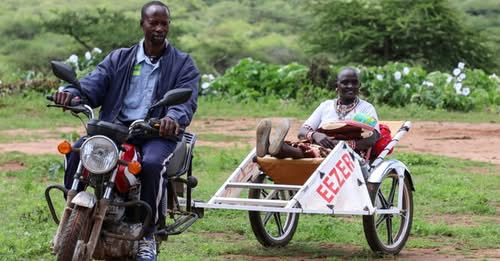
The Laikipia County Government has introduced a fleet of motorcycle ambulances aimed at expanding access to emergency medical care for expectant mothers and young children, particularly in remote areas where poor infrastructure limits the use of conventional ambulances.
The initiative was officially launched on Wednesday, February 4, 2026, and targets hard-to-reach parts of Laikipia North and sections of Laikipia West. County officials say the new transport system will significantly cut response times in emergencies, especially in regions affected by rough terrain and inadequate road networks.
Speaking at the launch, Laikipia County Executive Committee Member for Health, Dr. Albert Taiti, described the project as a critical step in the county’s efforts to improve maternal and child health outcomes.
“We are pleased to roll out this motorcycle ambulance pilot in partnership with the Eezer Initiative,” Dr. Taiti said, noting that the programme comes at a time when the county is intensifying efforts to lower maternal and infant mortality rates.
The project is being implemented in collaboration with the Eezer Initiative, a Swedish-supported programme that promotes innovative transport solutions for rural healthcare delivery across Africa. Laikipia is among the first counties in Kenya to pilot the model ahead of a possible national rollout.
Eezer’s Laikipia coordinator, Dr. Alfred Sadera, said the initiative responds to long-standing challenges faced by women in labour who must travel long distances to health facilities over poor roads.
“This programme is designed to bridge the access gap. For many communities here, reaching a health centre in time is a serious challenge, especially for expectant mothers,” he explained.
In the initial phase, five fully equipped motorcycle ambulances have been deployed, each fitted with patient carriers and essential medical supplies. The units have been strategically stationed in Laikipia North and neighbouring areas to support existing health facilities.
County Director of Preventive and Promotive Health Services, Wilson Gitonga, said the motorcycles will complement the county’s ambulance fleet and strengthen referral systems in rural communities.
“These units will help ensure that mothers and children who require urgent referrals can be transported quickly from remote facilities,” Gitonga said, adding that reducing delays in emergency care is key to saving lives.
The Eezer model has previously been implemented in countries such as Burundi, where between 2021 and 2023, 71 motorcycle ambulances facilitated more than 24,000 pregnancy-related emergency transports.